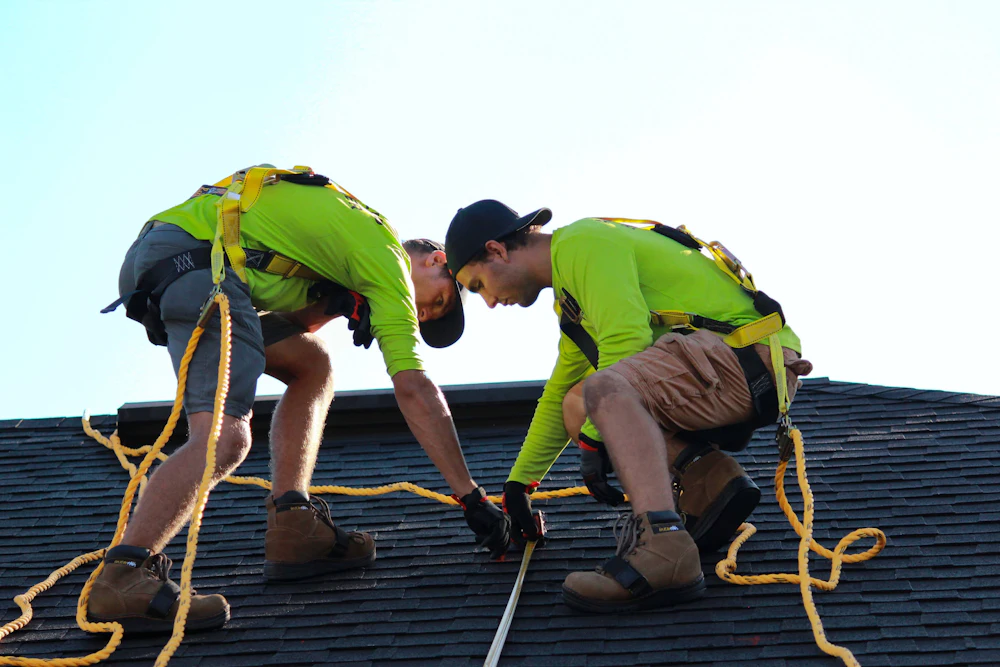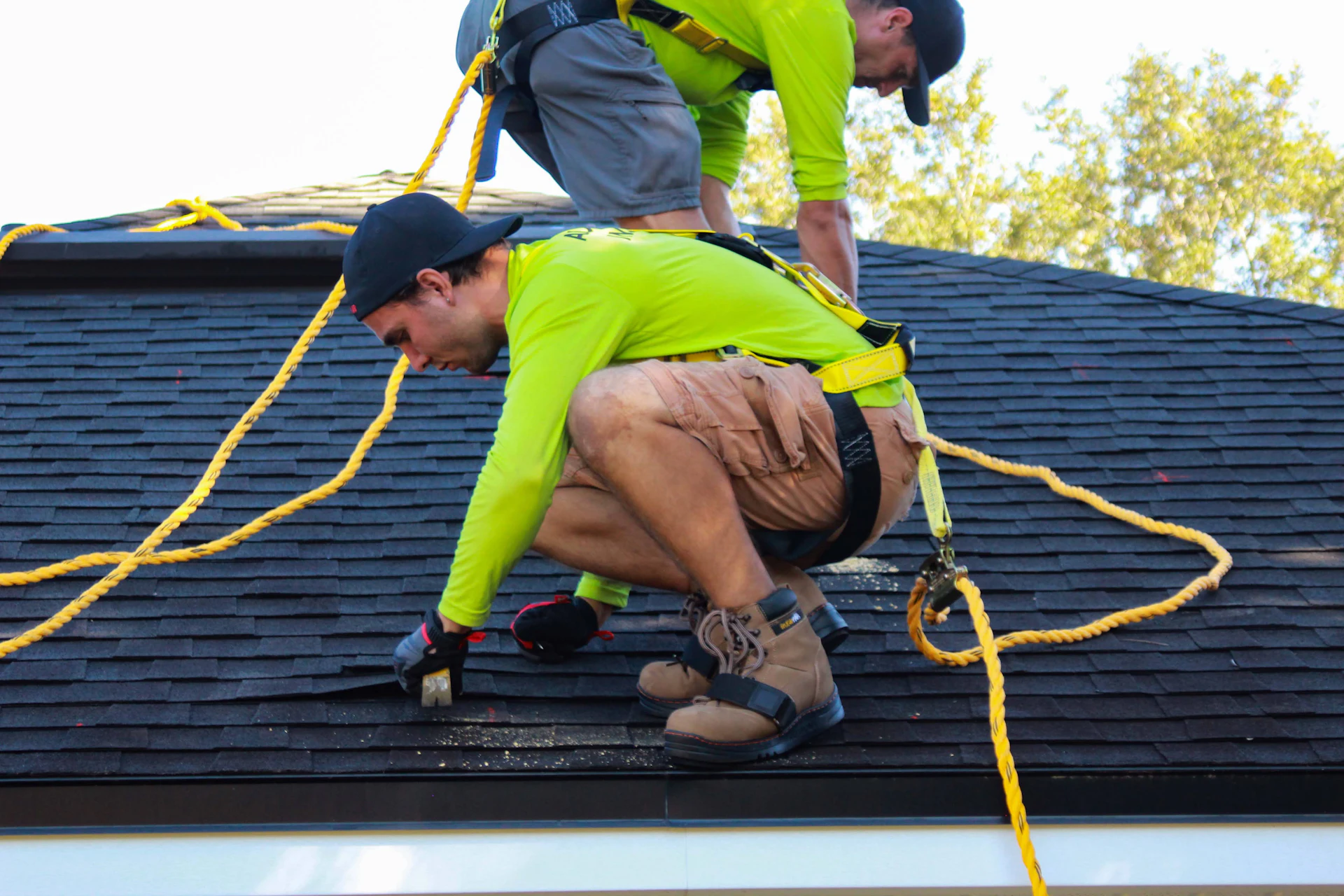
Tile roof underlayment replacement is the process of removing the tiles from a roof, replacing the worn waterproof layer beneath them, and reinstalling the tiles. In Arizona it’s the most common major repair on tile roofs, because the underlayment wears out decades before the tiles do. Perfect Roofing performs this work as part of our tile roofing service across the Phoenix area.
What does tile roof underlayment do?
Tile roof underlayment is the waterproof membrane installed on the roof deck beneath the tiles. Tiles are not watertight; they overlap to shed most rain, but wind-driven water and monsoon downpours get underneath them. The underlayment catches that water and channels it down and off the roof. When the underlayment fails, water reaches the deck, then the attic and ceiling.
Why does underlayment fail in Arizona?
Underlayment fails in Arizona mainly because of heat. On a summer afternoon a roof deck under tile gets far hotter than the air temperature, and that heat repeats daily for months. Over time the underlayment loses its oils, becomes brittle, cracks at laps and fasteners, and tears. Traditional felt underlayment typically lasts about 20 to 25 years in Phoenix, while concrete and clay tiles often last 50 years or more.
What are the signs your underlayment needs replacing?
- Ceiling stains or leaks with no visible broken tiles. This is the classic sign, because the tiles are fine but the layer beneath them isn’t.
- The roof is 20 or more years old and has original underlayment.
- Brittle, cracked or crumbling underlayment visible at the eaves, valleys or under a lifted tile.
- Leaks during heavy monsoon rain that stop when the weather is dry.
- Water stains or daylight in the attic along rafters and the deck.
A roof inspection checks the underlayment at the edges and under lifted tiles to confirm its condition.
How does a lift-and-relay work?
A lift-and-relay replaces the underlayment while keeping your existing tiles:
- Tile removal: tiles are removed by hand and stacked on the roof.
- Tear-off: old underlayment and battens are removed down to the deck.
- Deck repair: any soft, damaged or rotted decking is replaced.
- New underlayment: new underlayment is installed, with new flashing at valleys, walls and penetrations.
- Battens: new battens are fastened where the tile system requires them.
- Tile reinstallation: the original tiles go back on, and broken tiles are replaced with matching ones.
Should you replace underlayment or get a new tile roof?
Replace only the underlayment when your tiles are in good condition and still available to match. Choose a new tile roof when many tiles are broken, the profile is discontinued, or you want a new look. Either way, the leak problem is solved by the new underlayment. Our guide on whether to repair or replace a roof covers the broader decision.
How much does tile underlayment replacement cost in Phoenix?
Published 2026 cost guides put tile underlayment replacement in the Phoenix area at about $6,000 to $16,500 for a typical 1,500 to 2,000 square foot home. These are estimates only. Your actual quote depends on roof size and pitch, the underlayment chosen, decking repairs and how many tiles need replacing. See the full Phoenix roof replacement cost guide for other roof types.
Get your underlayment checked
If your tile roof is approaching 20 years or you have a leak with no broken tiles, book a free inspection. We’ll show you photos of your underlayment and give you a written estimate for tile roofing work.
Frequently asked questions
How long does tile roof underlayment last in Arizona?
Tile roof underlayment typically lasts about 20 to 25 years in Arizona. Extreme roof-deck heat dries it out until it cracks, even though the tiles above can last 50 years or more.
Can you replace underlayment without replacing the tiles?
Yes. A lift-and-relay removes the tiles, replaces the underlayment and battens, and reinstalls the same tiles, replacing broken ones with matches.
How long does a tile underlayment replacement take?
It usually takes several days for an average home, because each tile is removed, stacked and reinstalled by hand. Roof size, pitch and decking repairs affect the timeline.